The roar of the Grand Prix returned.
For three days, the streets of downtown St. Petersburg transformed into a racetrack, surrounded by fans and framed by water. In the days leading up to the weekend, concrete blockades locked into place, grandstands rose where traffic normally crawls, and luxury yachts lined the marina as sponsors, team owners, and corporate partners arrived for race week. Once again, the Firestone Grand Prix of St. Petersburg reminded the country how this city opens the IndyCar Series.
During official races, ashort film starring Albert Whitted Airport played on the big screen in the park. Titled “First Flight, First Right.” “First Flight,” the film nodded to the aviation history rooted at Albert Whitted Airport, the birthplace of the world’s first scheduled commercial airline service in 1914. Almost 100 years later, the 2005 St. Petersburg race was widely cited as the first time the IndyCar Series turned to the streets, featuring a right-hand turn shortly after the start and finish line near Albert Whitted Airport.
This has never been just another street course. St. Pete is where aviation keeps up with modern speed. Runway 7-25 transformed from a 3,676-foot runway into the main straightaway of a 1.8-mile, 14-turn circuit. A defining image of this race is a pack of drivers launching down an actual runway at full throttle, engines buzzing as they cross the large runway heading for the numbers of Albert Whitted Airport. Meanwhile, 18-36, the airport’s shorter runway, remained operational throughout race weekend. A few arriving and departing aircraft caught a rare aerial view of the live street circuit below. For three days, racing and aviation coexisted.
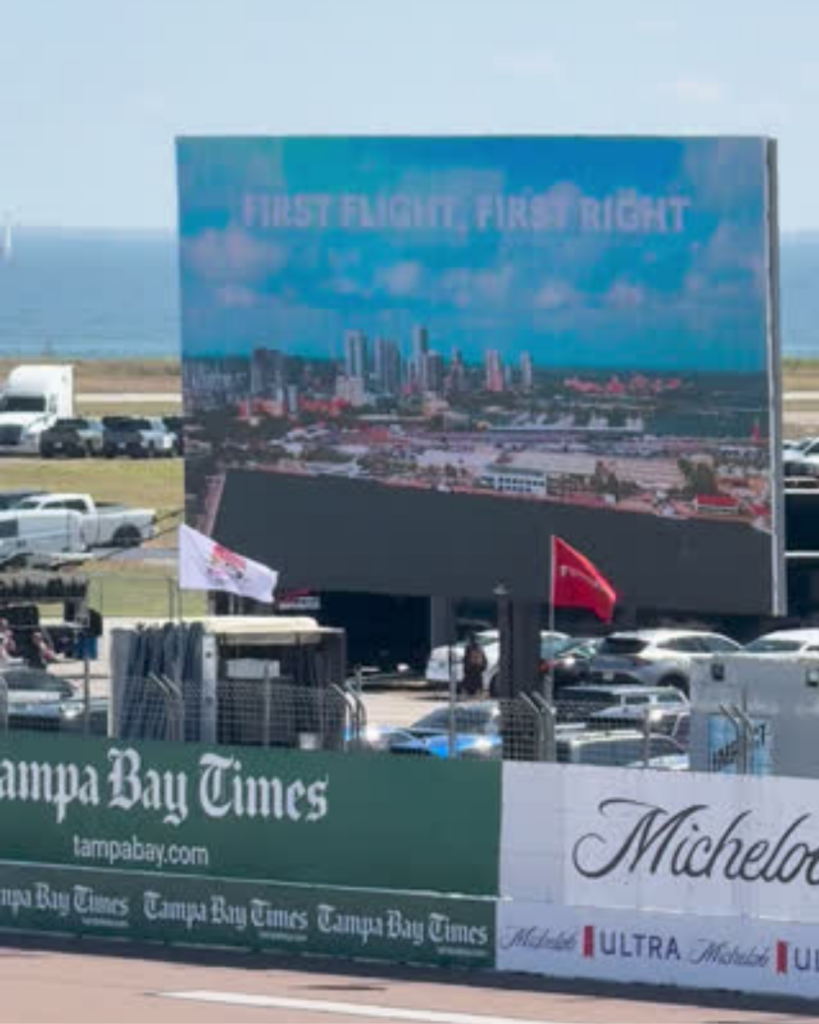
As quickly as race infrastructure went up, crews methodically cleared the surface, and restoration began back to flight operations.
Pilots have said they sometimes landed afterward and could still spot faint tiremarks on the pavement, subtle reminders that the same strip of asphalt had just hosted 200-mile-per-hour world-class drivers.
Over the past two decades, the Grand Prix has poured energy into local businesses, hotels, restaurants, and the global profile of the city. In one year, it generated an estimated $61 million in economic impact. As the season opener for the IndyCar Series, it placed St. Petersburg on center stage once again, broadcasting its waterfront beauty and unmistakable character to fans around the world. The airport is that stretch of asphalt that separates this event from every other street race in America.
Now that the grandstands have come down and the jets have reclaimed their pavement, one thing is clear: St. Pete is a better place because of Albert Whitted Airport.
March 2026
Nisuka Williams